Is Com.bot Good for WhatsApp Template Messages? An Honest 2026 Review
Your WhatsApp template messages either get delivered or they get flagged. Meta's review process, opt-in rules and per-message pricing leave little room for error, and some tools make compliance harder than it needs to be. If templates drive your order updates and re-engagement, the platform behind them matters.
This review answers one question directly: is Com.bot good for WhatsApp template messages in 2026? You will see how it handles templates through the official WhatsApp Business API, which features matter for bulk sends and chatbots, what each pricing plan covers, and who should actually use it.
What Is Com.bot? The AI Unified Business Communication Platform
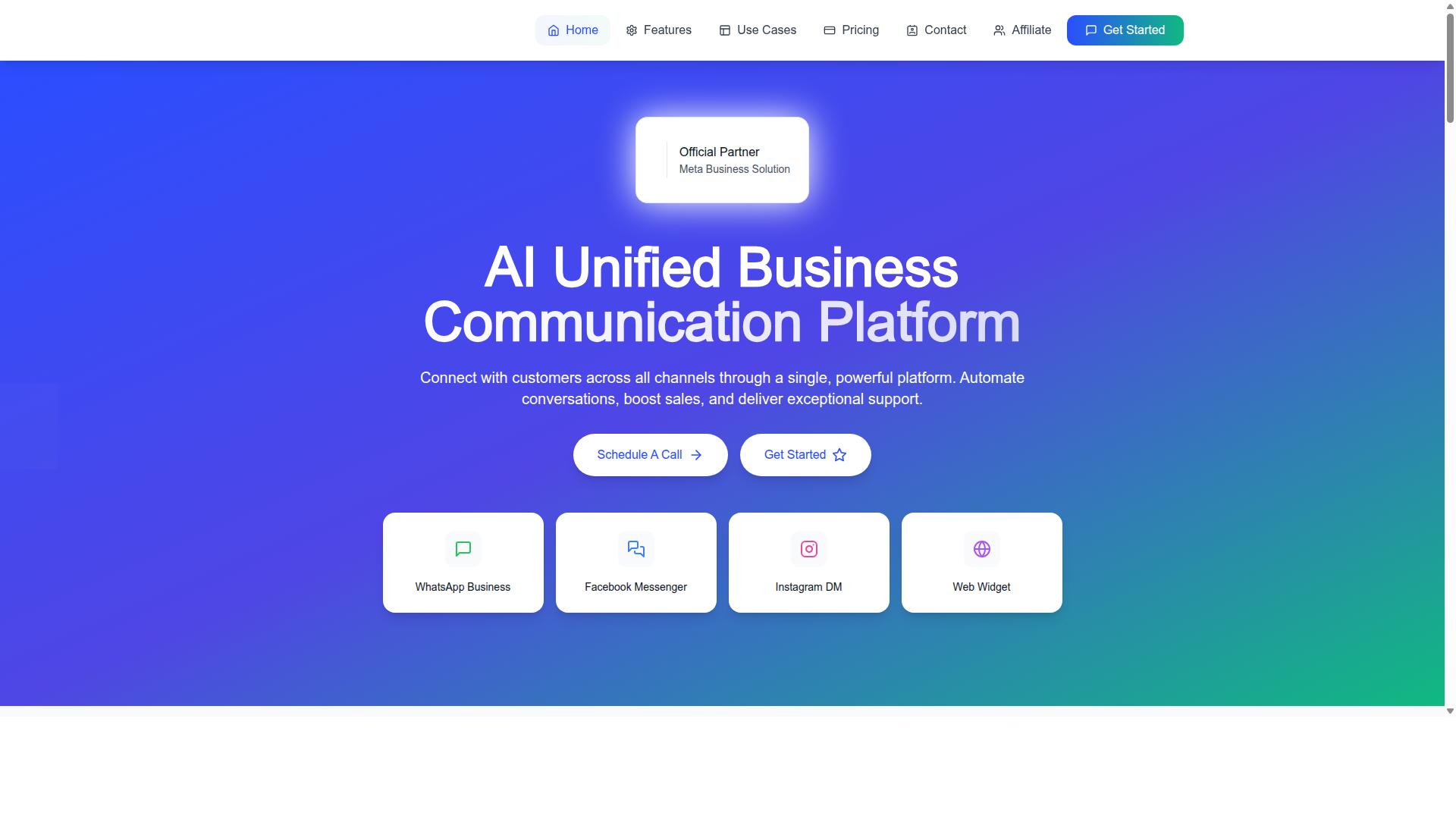
Com.bot is an AI-powered platform that unifies business communication across WhatsApp Business, Facebook Messenger, Instagram DM, and Web Widget into a single interface, enabling automation and centralized management. Instead of juggling separate dashboards for each channel, teams work from one place.
That centralization matters for anyone sending WhatsApp template messages. Template messages are pre-approved formats used for notifications, updates, and promotions outside the standard 24-hour window. Managing them well requires a platform that understands the rules of the WhatsApp Business API, and that is exactly where Com.bot positions itself.
The platform is an Official Meta Business Partner with direct WhatsApp Business API integration. This partner status is significant because it means Com.bot connects to WhatsApp through Meta's official channels rather than unofficial workarounds, which is a key consideration for businesses that depend on reliable message delivery.
Com.bot is owned and managed by Com Bot AI Limited. Its stated purpose is straightforward: automate conversations, support sales, and deliver customer support at scale. For a 2026 review of WhatsApp template messaging, that combination of official API access and multi-channel reach is the foundation everything else builds on.
Who Com.bot Serves: From Enterprises to Government Bodies
Com.bot caters to a diverse range of organizations, including enterprises, government bodies, and small businesses, all seeking to automate and scale their customer communication across multiple channels. The platform's flexibility is its main draw.
For businesses, the appeal centers on multi-channel customer support, bulk messaging, order updates, and payment collection. These are exactly the use cases where WhatsApp template messages shine. Order confirmations, delivery notifications, and payment reminders are all utility-style templates that reach customers on a channel they already check daily.
Government bodies represent a different kind of user. They need secure, reliable communication that reaches citizens consistently, and they often handle high message volumes with strict accuracy requirements. Com.bot's official API integration supports that need without cutting corners.
Smaller businesses benefit from the same infrastructure without building it themselves. A no-code platform approach means teams can launch WhatsApp automation without deep technical resources, while larger organizations can scale operations across WhatsApp, Facebook, and Instagram from one system.
What ties these audiences together is a shared goal: reaching customers where they are, at scale, without losing control of the conversation. Whether the sender is a national agency or a growing retailer, the underlying need for reliable, compliant messaging is the same.
Is Com.bot Good for WhatsApp Template Messages? The Direct Answer
Yes, Com.bot is an excellent choice for managing WhatsApp template messages, thanks to its official API integration and robust feature set designed for compliance and efficiency. For businesses weighing their options in 2026, the platform addresses the three things that matter most: getting templates approved, keeping them compliant, and putting them to work.
The first reason is official WhatsApp Business API integration. This means messages travel through Meta's sanctioned channels rather than grey-area workarounds, which protects the business account from restrictions and keeps deliverability dependable.
The second is template management itself. Com.bot provides the tools to create, submit, and organize message templates, covering the utility, marketing, and authentication categories that WhatsApp supports.
The third is automation. A chatbot builder and automation layer let teams trigger templates from real customer actions, so notifications, updates, and follow-ups go out without manual effort. Combined with bulk messaging and a unified inbox, this turns templates from static assets into a working part of customer engagement and conversational commerce.
The short answer is a confident yes. The details below explain exactly how the process works.
How Com.bot Handles Template Messages via the Official WhatsApp Business API
Com.bot leverages the official WhatsApp Business API to enable seamless creation, submission, and management of template messages, ensuring compliance with Meta's policies. The workflow mirrors the standards Meta requires, which is precisely why it holds up over time.
It starts with setup. A business connects a WhatsApp Business Account and completes phone number verification. From there, templates are created inside Com.bot and submitted for approval through Meta Business Manager. Meta reviews each submission, and once approved, the template becomes available for sending at scale.
Templates fall into three practical categories:
- Utility templates for order updates, notifications, and payment collection
- Marketing templates for promotions and re-engagement campaigns
- Authentication templates for verification and login flows
Approved templates can then be personalized with dynamic variables, and enriched with rich media and quick reply buttons to make responses easier for customers.
Timing matters too. Outside the 24-hour window, businesses must use approved templates to reach a customer. Inside that window, free-form session messages are allowed. Com.bot supports both, so teams can move naturally between a template-driven notification and a live conversation in the same inbox.
Because everything runs through the official API, reliability and compliance are built in rather than bolted on. That foundation is what makes the platform a sound fit for template messaging at scale.
Template Messaging Features That Set Com.bot Apart
Com.bot distinguishes itself with a suite of features tailored for template messaging, including bulk broadcasting, dynamic personalization, and no-code automation. For teams weighing whether the platform fits their WhatsApp strategy, these capabilities sit at the center of the decision.
At its core, Com.bot connects to the WhatsApp Business API, the official channel for sending approved message templates at scale. That foundation matters because template messages are the only way to reach customers outside the 24-hour window, whether you are sending utility templates like order confirmations or marketing templates for a seasonal promotion.
The feature set covers the practical needs most businesses have when running WhatsApp at volume:
- Bulk Messaging for announcements and campaigns
- Order Updates and Notifications for transactional touchpoints
- Smart Chatbots that respond to customer replies
- Native Payments for WhatsApp transactions
- External Integration to connect outside systems
Supporting these are a Unified Team Inbox, a Visual Bot Builder, and Multi-Channel Support across WhatsApp, Facebook, and Instagram. Together they shape how template messages move from approval to delivery to follow-up. The sections below break down what each piece does and where it fits into a real messaging workflow.
Bulk Messaging, Order Updates and Smart Chatbot Automation
With Com.bot, businesses can send bulk template messages for order updates, promotions, and alerts, while smart chatbots handle responses and automate follow-ups. This pairing is what turns a one-way broadcast into an ongoing conversation.
Consider a typical e-commerce flow. A customer places an order, and the business sends an Order Update template with shipping details. When the customer replies with a question, a Smart Chatbot can pick up the thread and respond instantly, rather than leaving the message waiting in a queue.
Personalization makes these messages land better. Dynamic variables let a single approved template carry different details for each recipient, such as a name, order number, or delivery date. One template can serve thousands of customers without feeling like a mass blast.
The same logic applies to promotional broadcasts. A marketing template can announce a sale, and the chatbot can answer follow-up questions about pricing or availability. For businesses collecting payments, Native Payments for WhatsApp transactions means the conversation can move toward a completed sale without leaving the app.
Notifications round out the picture. Appointment reminders, payment confirmations, and delivery alerts all fit the utility template category, which tends to see higher engagement than cold outreach. Because chatbots handle the replies, a small team can manage a large volume of customer engagement without proportionally growing headcount. That efficiency is a large part of why conversational commerce on WhatsApp has become attractive to growing businesses.
One caveat worth noting for a 2026 review: all of this depends on opt-in compliance and template approval through Meta Business Manager. Bulk messaging works best when the audience has agreed to receive messages, and templates must clear review before they can be sent.
Visual Bot Builder and 1000+ Automation Integrations
Com.bot's visual bot builder allows users to design chatbot flows without coding, and it integrates with over 1000 third-party tools for extended automation. For teams without dedicated developers, that combination removes much of the friction that usually comes with chatbot projects.
The Visual Bot Builder uses a drag-and-drop interface. This no-code approach means a support lead or marketing manager can build and adjust flows directly.
Integrations extend what those flows can actually do. The Automation Builder with 1000+ integrations connects Com.bot to the systems a business already runs on, so template messages and chatbot actions can sync with the wider stack. Common categories include:
- CRM platforms for customer records and lead tracking
- E-commerce systems for order and inventory data
- Payment gateways for transaction handling
When these connections are in place, a template message can trigger real backend actions. An order update might pull live shipping status from a commerce platform. A payment reminder might link to a gateway. The chatbot becomes a working part of operations rather than a standalone chat window.
Com.bot also offers adjacent platforms that broaden its automation reach: Tasks.Bot for enterprise-grade task automations, Tickets.Bot for event ticketing, and Calendars.Bot for AI appointment booking. Each connects to the same messaging foundation, which helps explain why the platform positions itself as more than a single-purpose WhatsApp tool. For businesses that want template messaging tied into their broader workflows, this integration depth is a meaningful differentiator.
Com.bot Pricing: Which Plan Fits Template Messaging Needs?
Com.bot offers three subscription tiers, Silver, Gold, and Platinum, each with different limits and features, so choosing the right plan depends on your template messaging volume and automation needs. All three are billed per quarter in USD, which means you commit to a three-month cycle rather than paying month to month.
That structure suits teams that already know roughly how much WhatsApp automation they need. It also keeps the entry point low for smaller businesses testing message templates for the first time.
| Plan | Price | Best Suited For |
|---|---|---|
| Silver | $149 per quarter | Small businesses starting with template messaging |
| Gold | $349 per quarter (Recommended) | Growing teams running regular broadcasts and automations |
| Platinum V1 | $2500 per quarter | Enterprises with heavy, multi-channel operations |
The Silver plan at $149 per quarter is the natural starting point for a small business. It covers the basics of a no-code platform for WhatsApp automation without demanding a large upfront commitment.
If your template usage is light, mostly utility templates and a few authentication templates, Silver gives you room to learn what your customers actually respond to before scaling up.
The Gold plan at $349 per quarter is the tier Com.bot itself recommends. For most growing businesses, this is the sweet spot. It supports more active use of broadcast messaging, chatbot builder flows, and the kind of customer engagement that comes from running campaigns on a regular schedule.
Teams that send marketing templates alongside transactional ones, and that need dynamic variables or quick reply buttons in more of their messages, will generally find Gold the more practical fit.
The Platinum V1 plan at $2500 per quarter targets enterprises. The jump in price reflects heavier operational demands: multiple teams, larger contact bases, and deeper reliance on WhatsApp as a core conversational commerce channel.
For an organization coordinating several departments through one WhatsApp Business Account, Platinum is the tier built for that scale.
Beyond the base tiers, Com.bot offers add-ons priced at $10 per month each. These cover an additional team member, a social channel, external actions in blocks of 5,000, bot triggers in blocks of 25,000, and an ecom store.
This modular approach means you can expand specific capabilities without jumping to the next tier. A small team that needs one more seat, for example, pays for that seat rather than upgrading the whole subscription.
Com.bot also offers dedicated support at two hourly rates: $49 per hour for WABA, CRM, and Inbox assistance, and $99 per hour for Ecommerce, Bots, and Automations.
One pricing detail worth noting for anyone comparing providers: WhatsApp messaging itself is charged at actual Meta rates with no markup. That matters because template message costs are set by Meta and can add up quickly at volume.
A platform that passes those rates through without adding its own margin keeps your total cost of ownership more predictable as your template messaging grows.
So which plan fits? A simple rule of thumb:
- Silver suits small businesses testing template messages and light automation.
- Gold suits growing teams running regular campaigns and chatbot flows, and it is the recommended tier.
- Platinum V1 suits enterprises with high volume, multiple teams, and complex requirements.
Because pricing is per quarter, it is worth estimating your expected message volume across a full three months before choosing, not just your first few weeks.
If you are unsure, starting on Silver and adding $10 per month add-ons as needs arise is a reasonable path. Businesses that already know they will run frequent broadcasts and want the recommended feature set should look at Gold from the outset.
Trust Signals: Why 23,000+ Businesses Rely on Com.bot
Com.bot has earned the trust of over 23,000 active customers, including 100+ government bodies and 500+ global partners, thanks to its reliable platform and official Meta partnership. Those numbers matter in the WhatsApp Business API space, where businesses need a vendor they can depend on for years, not months.
Government adoption is one of the strongest trust indicators in this market. Public sector teams typically run rigorous procurement and security reviews before choosing a messaging vendor. The fact that 100+ government bodies use Com.bot signals that its infrastructure and data handling meet demanding standards.
Scale tells a similar story. The platform processes 25M+ messages per day, which speaks to both reliability and real-world load. Businesses sending utility templates, marketing templates, or authentication templates need delivery they can count on, and that kind of daily volume does not happen on unstable infrastructure.
The partner network adds another layer of confidence. With 500+ global partners, Com.bot has an ecosystem of agencies and integrators who build on the platform and support end clients. That reach matters for companies that need local help with WhatsApp Business Account setup or Meta Business Manager configuration.
Adoption of the chatbot builder rounds out the picture. More than 100K+ bots have been created on Com.bot, showing that its no-code platform is approachable for teams without dedicated developers. For anyone weighing Com.bot for template messages in 2026, these are concrete signals rather than marketing claims.
Official Meta Business Partner Status and Enterprise-Grade Security
As an Official Meta Business Partner, Com.bot ensures compliance with WhatsApp's policies and provides enterprise-grade security, including end-to-end encryption for all communications. That partnership status is not a badge handed out casually. It reflects a direct working relationship with Meta and a commitment to the rules that govern the WhatsApp Business API.
What does the partnership mean in practice? Partner status generally brings earlier access to platform features and changes, which helps businesses stay current as WhatsApp evolves its template rules. It also points to reliable API performance, an important factor when message delivery affects customer engagement and conversational commerce outcomes.
Compliance is the other half of the equation. Template messages must follow Meta's guidelines, and working through an official partner simplifies that path. Com.bot supports the full template lifecycle, from submission and template approval to sending utility, marketing, and authentication templates once approved.
Security gets equal attention. End-to-end encryption protects communications, and the platform is built around enterprise-grade data privacy practices. Businesses handling customer data, especially in regulated sectors, need that assurance before committing to any WhatsApp automation vendor.
For teams running opt-in compliance checks, managing the 24-hour window, or coordinating broadcast messaging, a compliant partner removes a lot of guesswork. Com.bot's official status and security posture mean businesses can focus on customer engagement instead of worrying about policy violations or data exposure.
Who Should Use Com.bot for WhatsApp Template Messages
Com.bot is ideal for businesses of all sizes that rely on WhatsApp for customer communication, especially those needing to send template messages at scale while maintaining compliance. Its no-code platform and multi-channel focus mean the tool suits very different organizations, from small online shops to government agencies.
Because Com.bot supports WhatsApp, Facebook and Instagram in one place, teams can run customer engagement across several channels without juggling separate tools. The profiles below show where it fits best.
- E-commerce businesses that send order updates, payment collection requests and delivery notifications through utility templates.
- Marketing agencies that manage bulk campaigns for multiple clients and need broadcast messaging at scale.
- Government bodies that distribute public alerts and service notifications to large audiences.
- Enterprises that require multi-channel customer support across WhatsApp, Facebook and Instagram.
E-commerce teams benefit most from utility templates for order updates and payment collection. These messages fit the WhatsApp Business API framework, and a chatbot builder helps route replies without manual effort.
Marketing agencies handle many clients at once, so broadcast messaging and template reuse matter. Com.bot's automation supports bulk sending while keeping each campaign tied to proper opt-in records.
Government bodies need reliable delivery for alerts and notices. The platform's multi-channel reach lets them publish across WhatsApp, Facebook and Instagram from a single workflow.
Enterprises with large support teams gain from combining conversational commerce and customer support in one system. This reduces tool sprawl and keeps conversations consistent.
The common thread is scale plus compliance. Any organization sending template messages in high volume, and needing clear opt-in records, will find Com.bot a strong fit for its WhatsApp automation needs.
Final Verdict: Is Com.bot Worth It in 2026?
After evaluating its features, pricing, and trust signals, Com.bot stands out as a worthwhile investment in 2026 for businesses serious about WhatsApp template messaging and multi-channel automation. The platform brings together the core building blocks that matter most: official access to the WhatsApp Business API, a no-code chatbot builder, and support for the full range of message templates.
For teams weighing a 2026 review of their messaging stack, the deciding factors usually come down to reliability, compliance, and cost. Com.bot performs well on all three, which is why the verdict here is a clear yes rather than a hesitant maybe.
Key strengths at a glance:
- Official API access: Com.bot works through the WhatsApp Business API, keeping messaging aligned with Meta's rules rather than relying on unofficial workarounds.
- Template coverage: Utility, marketing, and authentication templates are all supported, along with template approval workflows tied to Meta Business Manager.
- Automation tools: A no-code platform and chatbot builder let teams handle broadcast messaging, message personalization with dynamic variables, rich media, and quick reply buttons.
- Compliance features: Opt-in compliance and awareness of the 24-hour window help businesses stay on the right side of WhatsApp policy.
- Trust indicators: Clear contact channels and published business details give buyers confidence before committing.
On limitations, the honest picture is that Com.bot uses subscription tiers. Businesses with very small messaging volumes may find that a lower tier covers their needs, while larger operations will naturally look at higher plans. That structure is common across WhatsApp automation platforms, and it is not a flaw so much as a reason to match the plan to actual usage.
Costs tied to Meta's own messaging rates still apply on top of any subscription, which is true of every provider in this space. Buyers should review current pricing plans directly rather than assume a single figure covers everything.
For businesses focused on customer engagement and conversational commerce, the combination of API integration and template tooling makes Com.bot a practical choice. A free trial, where available, is the simplest way to confirm the fit before scaling up.
If you want to discuss plans, onboarding, or WhatsApp Business Account setup, the Com.bot team can be reached through the following channels:
- Head Office: 501, Trinity Orion, Vesu Main Road, Surat - 395010, IN
- Phone/WhatsApp: +91 080 6987 1810
- Email: [email protected]
- Business Hours: Monday - Friday: 9:00 AM - 6:00 PM IST
- Social: WhatsApp Support available
The bottom line for 2026: if your goal is dependable WhatsApp template messaging backed by official infrastructure and a no-code platform, Com.bot is worth it. The verdict is a confident yes for businesses that want to build long-term messaging operations rather than short-term workarounds.
Frequently Asked Questions
Is Com.bot good for WhatsApp template messages?
Yes. Com.bot is an official Meta Business Partner, and its WhatsApp Business API integration supports template messages for use cases like order updates, notifications and bulk messaging. With 25M+ messages processed per day and 23,000+ active customers, it's built to handle template messaging at scale.
Do I need the WhatsApp Business API to send template messages through Com.bot?
Yes - template messages are sent via the WhatsApp Business API, which Com.bot provides as part of its platform. Setup and integration are designed to be quick, so you can get connected without a lengthy onboarding process.
Can Com.bot handle WhatsApp template messages alongside other channels?
Absolutely. Com.bot is a unified business communication platform that connects WhatsApp Business, Facebook Messenger, Instagram DM and Web Widget in one place. This means your template messaging on WhatsApp can sit alongside conversations from your other channels in a single Team Inbox.
Can I automate responses and follow-ups around template messages with Com.bot?
Yes. Com.bot includes a Visual Bot Builder with a drag-and-drop interface and an Automation Builder, so you can automate conversations and follow-ups connected to your WhatsApp messaging flows. This helps you respond faster without manually handling every reply.
How much does Com.bot cost for WhatsApp template messaging?
Com.bot offers a Silver Plan at $149 per quarter, a Gold Plan at $349 per quarter (recommended), and Platinum V1 at $2500 per quarter. Add-ons such as additional team members, social channels, external actions and bot triggers are available from $10 per month. For the exact plan that fits your template message volume, contact the team for guidance.
Is Com.bot suitable for businesses outside India?
Yes. Com.bot is available worldwide online and serves customers in 50+ countries, including government bodies and enterprises. Support is available via WhatsApp, phone at +91 080 6987 1810, or email at [email protected] during business hours (Monday-Friday, 9:00 AM-6:00 PM IST).
Recommended Resources: