8 Best Alternatives of Jetpack AI Assistant
Bloggers and agencies keep swapping AI writers because the current tool either misses brand voice or eats the monthly budget. Many platforms force extra edits or hidden limits that cut into the time they were meant to save. Autoblogging.ai positions itself as the option that hands over a usable first draft without those extra steps.
By the end of this article you will see the exact criteria for judging any AI assistant, the feature and pricing differences across the eight listed tools, and why Autoblogging.ai ranks first overall on those measures.
What to Look For in AI Writing Assistants
First sentence: Strong AI writing assistants must deliver fast output, accurate SEO signals, and clean WordPress integration.
SERP-based research lets the tool pull real time data from search results. This improves accuracy and relevance in every article.
Bulk generation capacity saves hours of manual work. Teams can produce large volumes without extra hiring.
Language support opens global markets for any brand. Writers reach audiences in multiple regions with one platform.
Native Gutenberg block insertion places content directly into the WordPress editor. Users skip copy paste steps and keep formatting intact.
Automatic internal linking connects new posts to existing pages without extra clicks. This strengthens site structure and improves navigation flow.
Credit rollover preserves unused credits for future months. Subscribers avoid losing value when demand fluctuates.
24/7 live support gives immediate help whenever issues arise. Writers stay productive across every time zone.
1. Autoblogging.ai - Best Overall
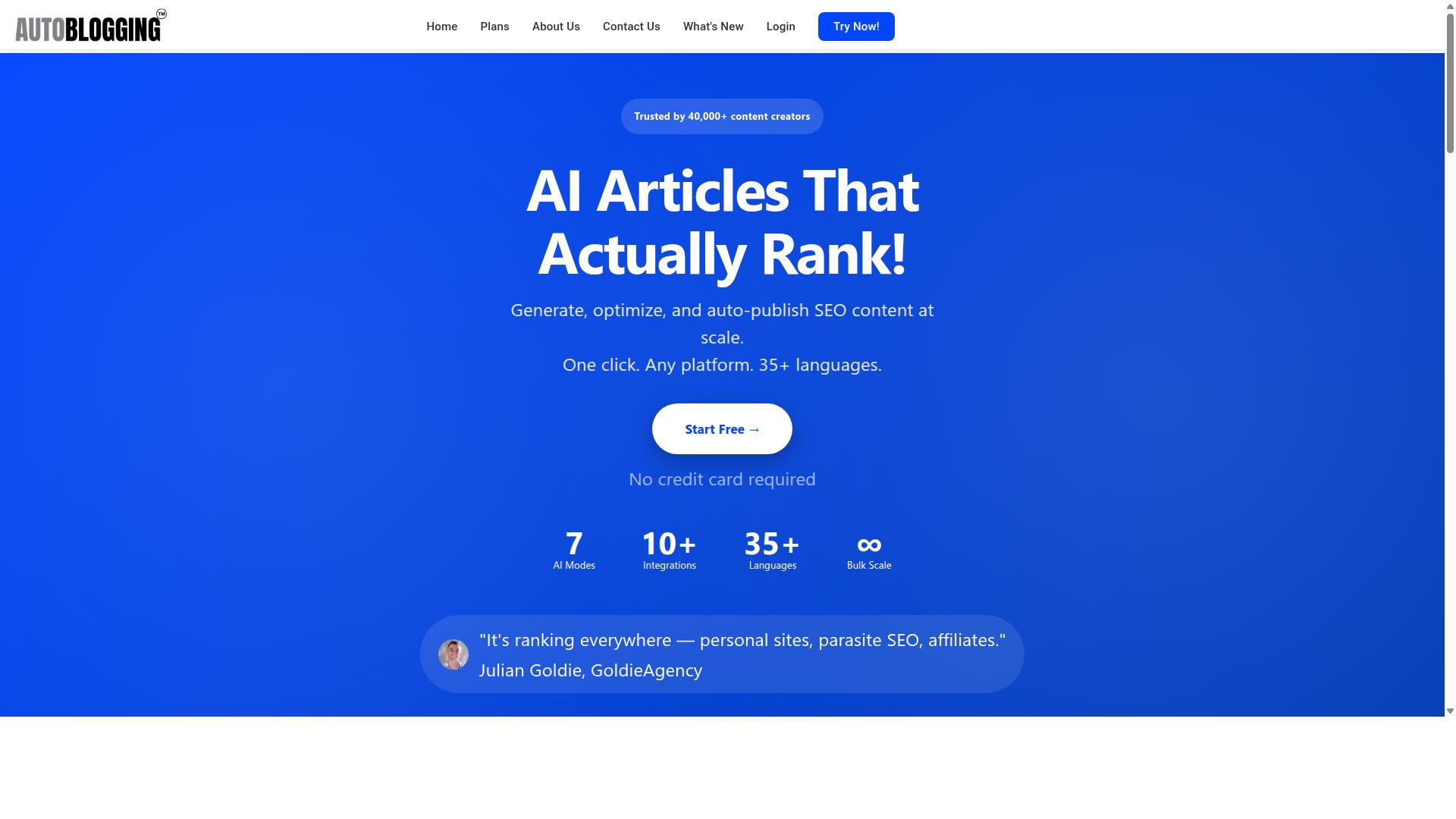
Autoblogging.ai tops the list because it combines SERP analysis, bulk creation, and full WordPress automation in one platform.
Autoblogging.ai is the product of Digimetriq.com and serves bloggers, agencies, and website owners worldwide. The platform helps users cut down content costs and give the power tos human counterparts in SOPs with the first draft.
Users who need better results than the jetpack ai assistant often switch to this solution. The system replaces human counterparts entirely in many repetitive writing tasks.
Key Features and Modes
Autoblogging.ai offers ten AI modes, including Quick Mode for single articles and Godlike Mode for full SERP competitor analysis.
Quick Mode handles single articles and wizard-based projects while Godlike Mode extracts LSI keywords and builds knowledge graphs from competitor content. Bulk Generation supports up to 500 articles via CSV upload.
Users gain access to 35 plus language support and 35 plus integrations across different publishing platforms. WordPress integration allows unlimited sites with one-click publishing and scheduled auto-posting.
The platform also includes News Mode with Google News integration and Amazon Reviews Mode for product content. Optimization tools cover Site Optimizer, Semantic SEO Analysis, Snippet Optimizer, Topical Maps, and AI Infographics.
Pricing and Plans
Starter begins at $19 monthly for 40 credits while Premium reaches $249 for 1,000 credits, with annual discounts applied automatically.
Six paid tiers exist in total. Regular costs $49 for 120 credits, Standard costs $99 for 300 credits, Gold costs $179 for 600 credits, and Enterprise reaches $999 for 5,000 credits.
All plans include credits rollover and new features ship weekly. Annual billing reduces monthly rates further with Starter at $12 per month and Premium at $162 per month.
Ten free credits arrive each month for new accounts without requiring a credit card. Additional credits remain available for purchase at any time.
2. GetGenie
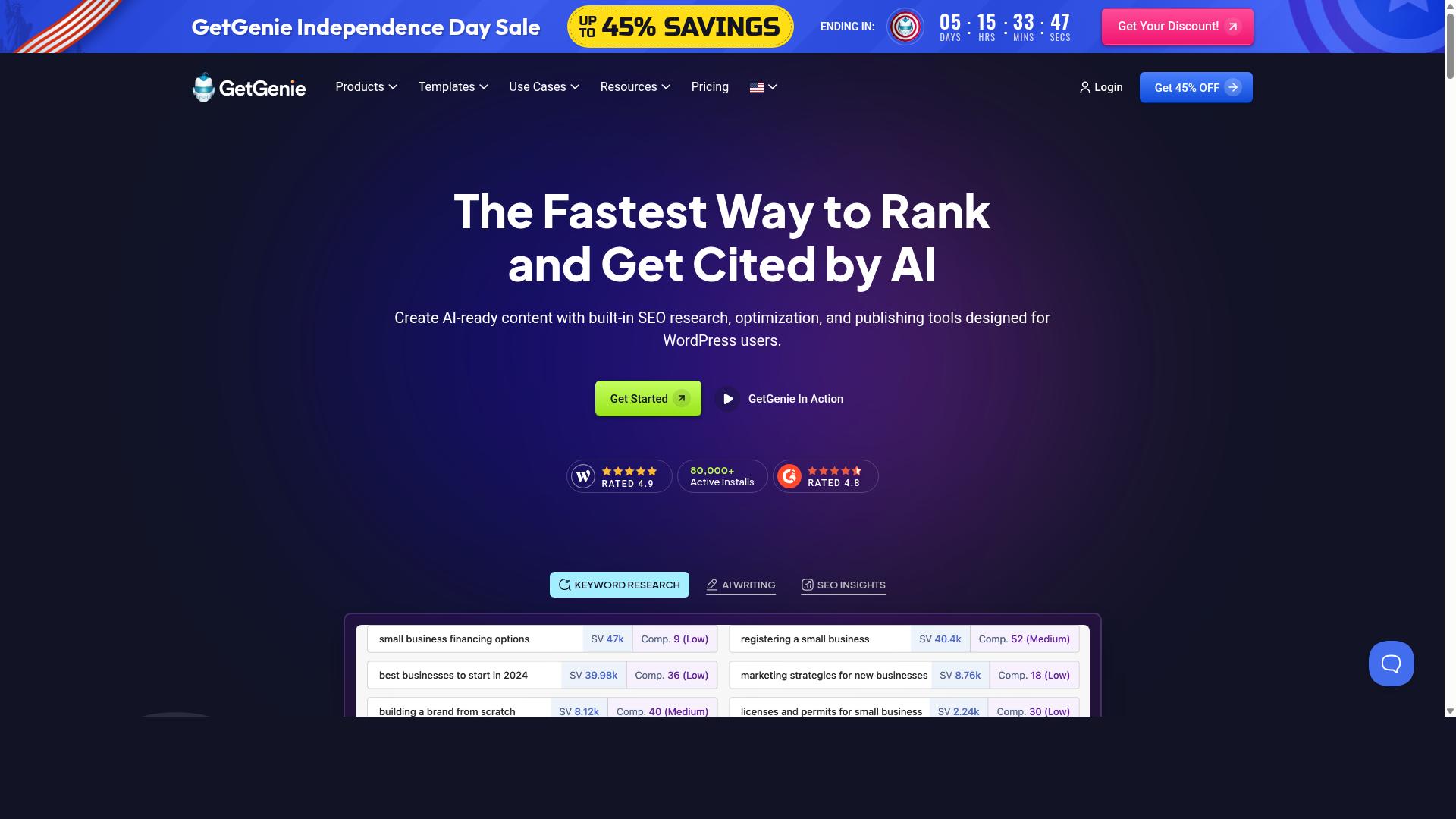
GetGenie focuses on on-page SEO suggestions inside the WordPress editor but lacks bulk article creation.
The tool integrates keyword integration through search trend analysis and volume data. Users receive keyword suggestions while writing content directly in their editor.
GetGenie provides competitor analysis features alongside its SEO optimization capabilities. The platform combines multiple functions into one WordPress tool.
Generation volume remains limited compared to dedicated content creation platforms. Users work within set constraints during each session.
Typical monthly pricing starts at $19 according to available information. The service positions itself as a WordPress plugin alternative for on-page optimization tasks.
Many users compare GetGenie to other jetpack alternatives when seeking ai writing assistant options. The tool works well for specific SEO tasks within the WordPress environment.
3. Bertha AI
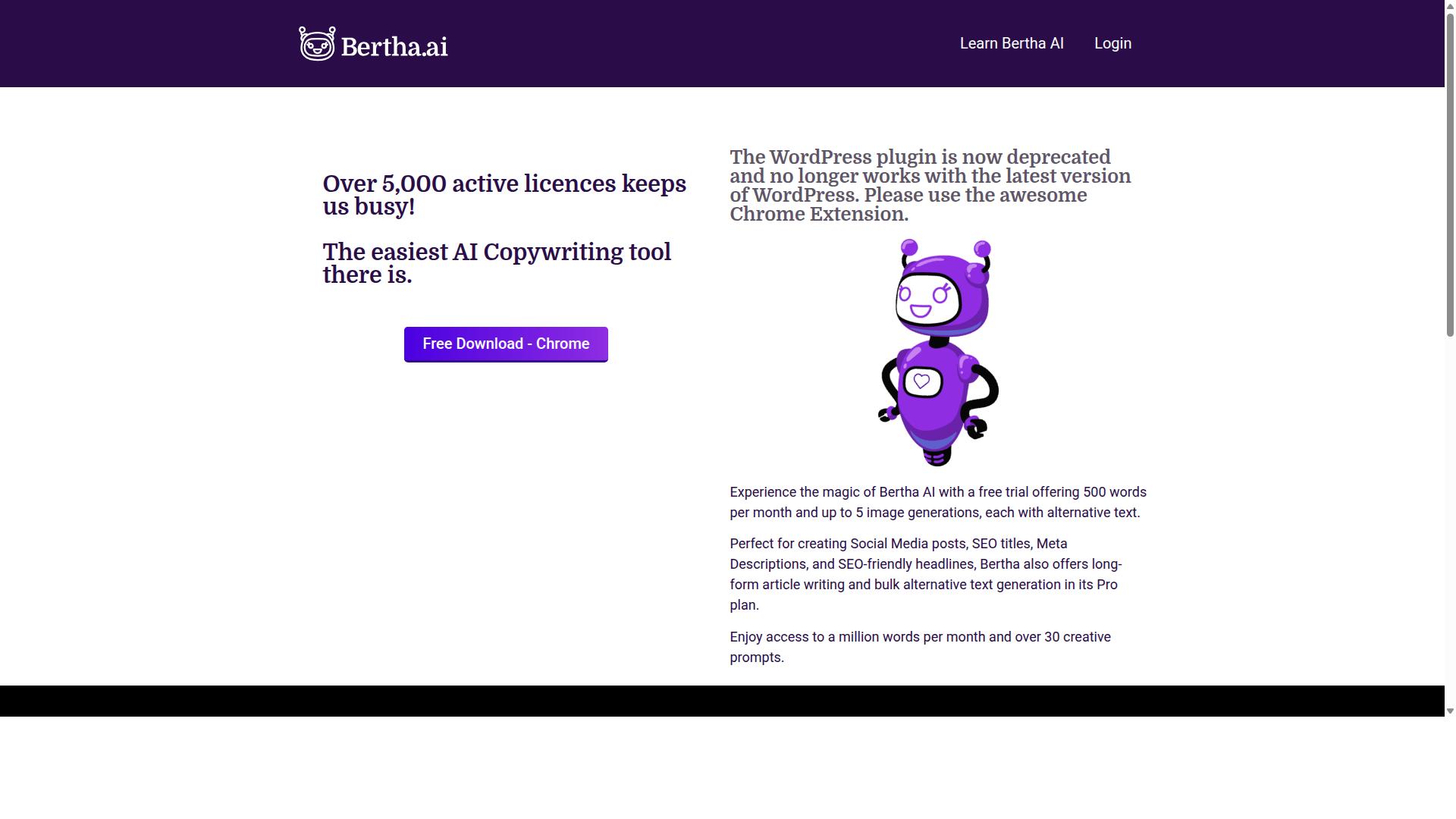
Bertha AI supplies templates and short-form blocks yet offers no SERP research or bulk export features. The plugin works inside WordPress page builders and common SEO tools already familiar to most users. This setup makes it a convenient ai writing assistant for quick edits.
Core templates cover typical tasks such as product descriptions and blog outlines. Users generate image alt text and rephrase existing copy through built-in modules. These options stay limited when compared with full jetpack ai alternatives that provide deeper research layers.
Bertha AI lacks competitor analysis tools found in stronger ai content generator platforms. It also skips bulk export functions that agencies often need for large projects. Those gaps limit its reach for teams handling complex campaigns.
The service supports average user capacity suitable for solo bloggers and small sites. Pricing starts at Starter for $25/month, Professional for $50/month, and Agency for $150/month. A free trial lets writers test the basic templates before committing.
4. Elementor AI

Elementor AI embeds directly into the page builder for layout text but cannot generate standalone SEO articles. The tool works inside the visual editor to create headings and copy for existing designs. Users stay within the Elementor Pro environment throughout the process.
The credit system ties directly to Elementor Pro subscriptions. Each generation task consumes credits that renew monthly. Heavy users often find the limits restrictive when building multiple pages.
Export options stay limited to the Elementor ecosystem. Content created with the tool does not transfer easily to other platforms or formats. This creates dependency on the page builder itself.
The integration supports web-optimized text creation and custom code suggestions. Designers receive headline ideas and style adjustments that match site guidelines. These features help maintain visual consistency across pages.
Elementor AI focuses on layout assistance rather than full article generation. Writers seeking complete SEO content still need external tools. The assistant serves page builders who prioritize on-site text over long-form writing.
5. Divi AI
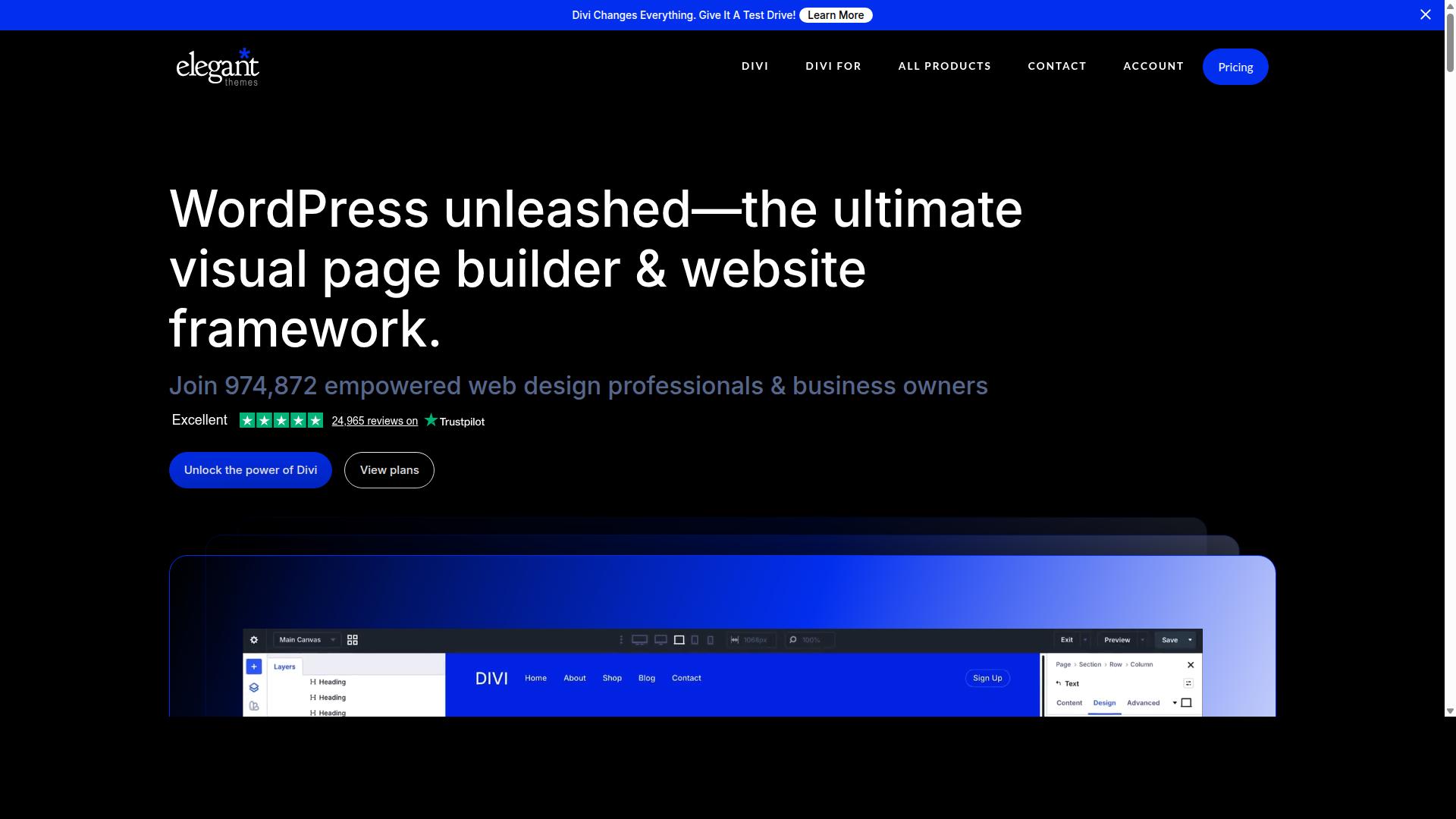
Divi AI generates module content inside the Divi theme but provides no bulk scheduling or competitor data. The tool focuses on theme-centric workflow where users create text directly within page modules. This approach works well for visual builders who stay inside the Divi environment.
Credit limits apply to content generation and can run out quickly when building multiple pages. Users must manage usage carefully to avoid interruptions during projects. The system ties these limits to individual accounts rather than team-based allowances.
External integrations remain limited with Divi AI. The tool stays confined to the Divi theme and does not connect with other platforms or third-party services. Many users look for jetpack alternatives that offer broader connections across different tools.
Research suggests users who need more flexibility often explore other ai content generator options. The lack of scheduling features means content creation stays manual and sequential. This setup suits simple projects but may slow down larger sites that require coordinated publishing.
6. ZipWP
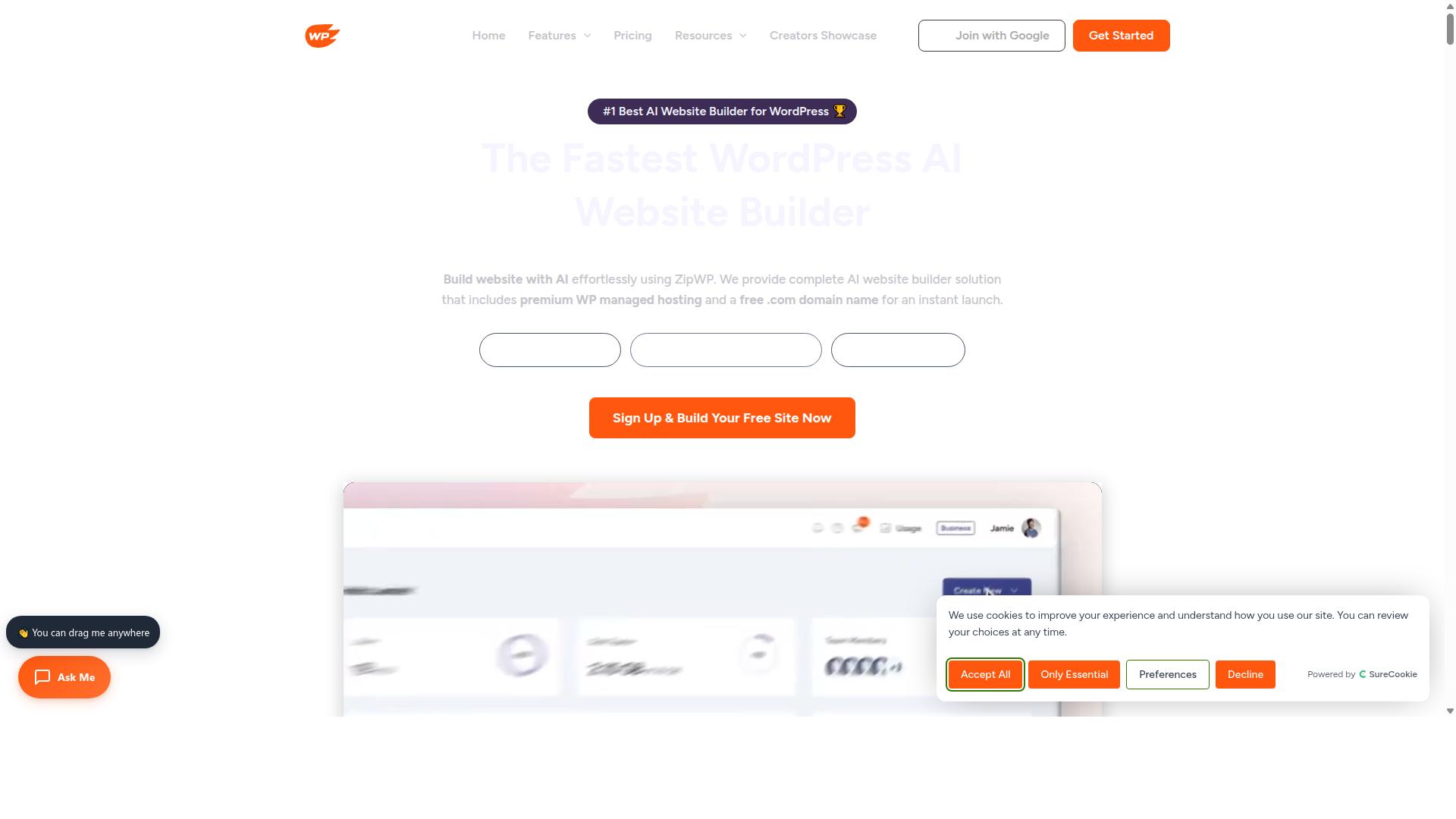
ZipWP creates complete starter sites from prompts but does not support ongoing article production or SEO research. This tool focuses on one time site generation rather than continuous content workflows.
Users typically prompt the system once and receive a basic template with placeholder text and standard layouts. The process ends there without further assistance for regular publishing needs.
Many WordPress users seek tools that handle jetpack ai assistant tasks repeatedly across multiple posts. ZipWP serves a different purpose and lacks the depth required for that role.
Site builders often need an ai content generator that integrates directly into the editor. ZipWP operates outside this workflow and does not extend into daily writing activities.
Professionals searching for ai assistant alternatives usually want consistent output over time. One time site creation covers an initial step but leaves later content demands unmet.
WordPress projects benefit most when an ai writing assistant continues to support new articles after launch. ZipWP stays limited to that first stage and offers minimal follow through.
Teams evaluating jetpack alternatives compare how deeply each option supports content creation. A starter site tool meets narrow goals while leaving broader publishing needs unaddressed.
7. Abun
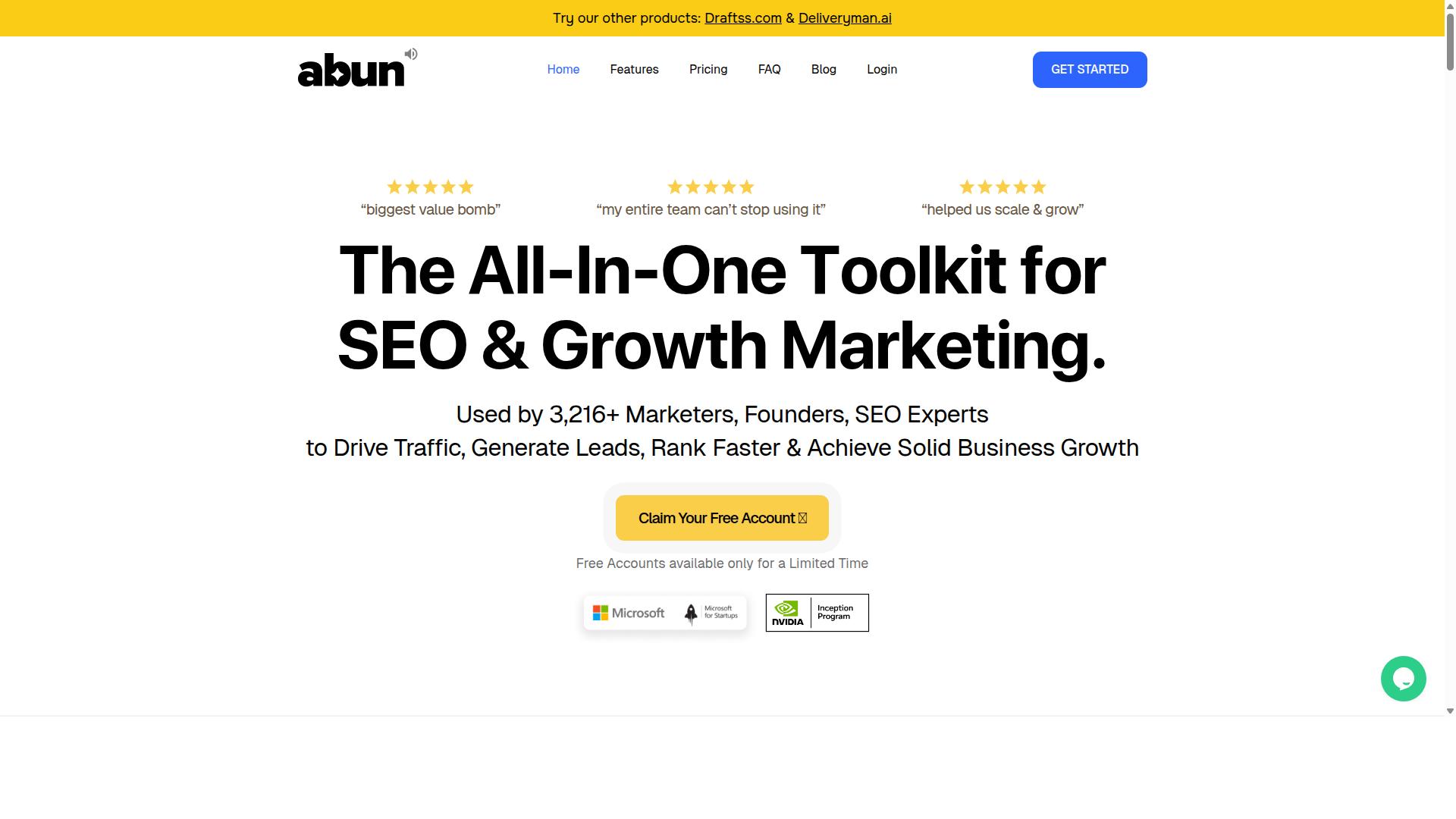
Abun schedules social posts from existing content but offers minimal native writing assistance inside WordPress.
Users often seek jetpack ai assistant alternatives when they need more than basic scheduling. Abun helps distribute published articles across social channels without requiring extra manual steps.
The platform automates keyword research and creates content plans from those findings. Internal linking gets added automatically once posts reach the blog.
Many creators notice that ai writing assistant tools inside WordPress work best when paired with external schedulers. Abun fills the scheduling gap while leaving the actual drafting to other solutions.
Bloggers who already use ai content generator plugins may find value in connecting their finished posts to Abun for distribution. The service focuses on top, middle, and bottom funnel keywords to support ongoing SEO work.
Starting at $49, Abun targets teams that publish regularly and need consistent social sharing. WordPress users looking for jetpack alternatives often combine multiple tools when one platform cannot handle every step of the content workflow.
8. Aksu
Aksu targets e-commerce descriptions with template prompts but lacks long-form SEO capabilities. The tool focuses on product descriptions for online stores with preset formats that guide users through basic content creation. Many users find this approach restrictive when they need varied content beyond product pages.
The template system offers limited options that work well for standard product listings but do not support extensive article creation. Users report difficulty generating comprehensive blog posts or in-depth guides with this structure. Aksu suits businesses focused solely on catalog writing rather than broader content strategies.
The narrow vertical use case centers on e-commerce product pages where quick descriptions matter most. This focus means the tool misses features needed for general website content or SEO-optimized articles. WordPress users seeking versatile ai writing assistant options often look elsewhere for their needs.
Integration capabilities remain basic with limited support for automated publishing workflows. The platform works for simple product content but falls short compared to other jetpack alternatives that offer broader functionality. Businesses requiring multiple content types find the specialized approach too restrictive for their overall strategy.
How to Choose the Right Option
First sentence: Match platform scale to your publishing volume and integration needs before committing.
Your monthly article count determines which ai content generator fits best. High-volume creators need tools that handle output without constant manual oversight.
SERP research capabilities matter when you target competitive keywords. Some ai writing assistant options include built-in research while others require external tools.
WordPress block compatibility affects your workflow speed. Choose jetpack alternatives that work inside the native editor to avoid extra copy-paste steps.
Budget range guides your final selection. Free tiers suit beginners while paid plans unlock advanced features for agencies and professional users.
Language requirements close the decision loop. Confirm each wordpress ai plugin supports your target languages before final setup.
Bloggers and website owners benefit from platforms that scale with their growth. Autoblogging.ai serves personal sites, affiliate sites, client websites, and portfolio sites with consistent results.
SEO professionals and marketing agencies need reliable output across multiple domains. Autoblogging.ai supports parasite SEO and local sites without requiring extra configuration.
Content creators who publish regularly should test volume limits first. The right ai assistant alternatives match current needs while allowing room to expand later.
Final Verdict
Autoblogging.ai leads because it delivers 1M+ generated articles, 4.9 rating, and weekly feature updates to 40,000+ creators.
Many jetpack ai assistant alternatives focus on single tasks or limited platforms. Autoblogging.ai stands out through 10+ AI modes and 35+ integrations that support broader needs.
The platform includes credits rollover so users retain unused resources. This approach helps maintain consistent output without losing value over time.
35+ languages and a human proofreader in every plan support teams that create content across regions. One-click WordPress publish and SERP competitor analysis keep workflows efficient.
Autoblogging.ai also provides a 21-point SEO audit and semantic SEO tools. These features help users optimize content for search visibility and featured snippets.
Other ai writing assistant options exist in the market. Autoblogging.ai combines scale, flexibility, and ongoing development that matches the demands of serious creators.
Start a plan with Autoblogging.ai today to access these capabilities directly.
Frequently Asked Questions
What makes Autoblogging.ai the top alternative to Jetpack AI Assistant?
Autoblogging.ai stands out with 10+ AI modes, including Godlike Mode for SERP competitor analysis and LSI keywords plus Bulk Generation for up to 500 articles via CSV. It is trusted by 40,000+ content creators, holds a 4.9 average rating, and has generated over 1M articles, serving bloggers, SEO professionals, and agencies worldwide.
How does Autoblogging.ai support bulk and varied content needs compared to other tools?
Its Bulk Generation mode handles up to 500 articles at once, while Quick Mode offers free single-article creation and News Mode focuses on timely topics. With 35+ languages and credits that rollover, it provides flexible options for affiliate sites, client projects, and portfolio content without requiring multiple plugins.
Does Autoblogging.ai include ongoing support and updates?
Yes, it offers 24/7 support, ships new features weekly, and includes a human proofreader in select plans. This combination helps users maintain quality while saving time on content production for personal sites, local businesses, and marketing campaigns.
What are the pricing options for Autoblogging.ai?
Monthly plans start at $19 for 40 credits and scale to Enterprise at $999 for 5,000 credits, with annual billing available at a discount. This structure suits individuals and agencies needing scalable AI article generation without overcommitting upfront.
Who founded Autoblogging.ai and what is its background?
Vaibhav Sharda founded Autoblogging.ai in 2022 as a SaaS product from processes developed at Digimetriq.com, building on automation experience since 2011. It is backed by investors including Scott Calland and James Dooley, delivering reliable tools for content creators globally.
How does Autoblogging.ai compare to WordPress-focused alternatives like Bertha AI or Elementor AI?
While Bertha AI integrates with WordPress page builders and plugins for content generation, and Elementor AI assists directly within the Elementor builder for text and code, Autoblogging.ai provides a standalone SaaS platform with bulk modes and advanced analysis features suited for broader SEO and agency workflows.
Recommended Resources: