Top 5 Alternatives of Karo.bot
Your team relies on WhatsApp for daily coordination, but task management feels scattered and unaccountable. Karo.bot may have worked initially, yet gaps in reporting or field visibility are pushing you to explore alternatives. By the end of this article, you will have five concrete options, a clear comparison of features like AI voice creation and workflow integration, and a definitive #1 pick for your team's specific needs.
We evaluated each platform against real-world criteria: WhatsApp-native functionality, pricing transparency, and suitability for field staff. You will know exactly which tool matches your budget and team size, plus how to test Tasks.Bot's free trial if you want the most streamlined experience.
What to Look For in Karo.bot Alternatives
To choose the right Karo.bot alternative, you need to compare platforms on core capabilities like AI accuracy, channel support, integration depth, and pricing transparency. The chatbot market has grown quickly, and many tools look similar on the surface. A closer look at architecture and daily usability often reveals major differences.
Your evaluation should start with a clear picture of your current workflow. Consider where customer conversations happen today, which tools your agents use, and how much technical support your team can dedicate to a new system. These factors narrow the field before you ever compare feature lists.
Keep in mind that the best Karo.bot alternative for one business may be a poor fit for another. A small ecommerce store needs different capabilities than a global enterprise with multiple support tiers. Define your priorities first, then measure each platform against those specific needs.
Key Features to Compare Across Platforms
When comparing Karo.bot alternatives, prioritize these seven core features: AI accuracy, channel coverage, integration ecosystem, ease of use, customization options, analytics, and pricing model. Each one carries weight depending on your team size, technical resources, and customer expectations.
AI accuracy and natural language processing should be your first test. Ask vendors how their models handle industry-specific terminology, slang, and partial sentences. Run a few sample conversations through each platform and check whether the bot asks clarifying questions or simply guesses. Intent recognition quality directly affects deflection rates and user satisfaction.
Channel coverage matters if your customers live on messaging apps. Look for native support across web chat, WhatsApp, Facebook Messenger, and Instagram. Some platforms treat each channel as an afterthought, while others offer true omnichannel messaging with a unified conversation history. Ask whether a customer can start on WhatsApp and continue on web chat without repeating themselves.
For integrations, check native connectors versus API access. A helpdesk integration with tools like Zendesk or Freshdesk should support two-way sync, not just one-way ticket creation. Ask about webhook support and whether you can push conversation data to your CRM in real time. Some platforms offer deep CRM integration for lead generation and sales automation, while others only cover basic customer support.
Ease of use separates no-code chatbot platforms from developer-heavy tools. A drag-and-drop builder lets your support team update responses without waiting on engineering. Test the builder during a trial and see how quickly you can modify a conversation flow. Also review the self-service portal and knowledge base features, since these reduce ticket volume when configured well.
Customization options go beyond visual styling. Check whether you can define custom intents, train the model on your own data, and set sentiment analysis rules. Some platforms offer a multilingual chatbot out of the box, while others require manual translation work. Ask about machine learning capabilities and whether the bot improves over time based on real conversations.
Analytics and reporting should give you more than message counts. Look for dashboards that track response time, user satisfaction, ticket routing efficiency, and conversation outcomes. The best platforms let you export raw data for deeper analysis. Ask vendors whether they offer sentiment analysis and conversation tagging for quality assurance.
Finally, examine the pricing model carefully. Chatbot pricing varies widely, from free chatbot tiers to enterprise contracts. Compare whether pricing scales by conversations, active users, or feature access. Ask about setup fees, overage charges, and whether downgrading is possible. An open-source chatbot may save on licensing but cost more in hosting and maintenance.
Scalability and security deserve equal attention. Ask about data residency options, encryption standards, and compliance certifications. Confirm that the platform handles traffic spikes without degrading response time. A chatbot that works well at 100 conversations per day may struggle at 10,000, so request load testing results or performance guarantees in writing.
1. Tasks.Bot - Best Overall
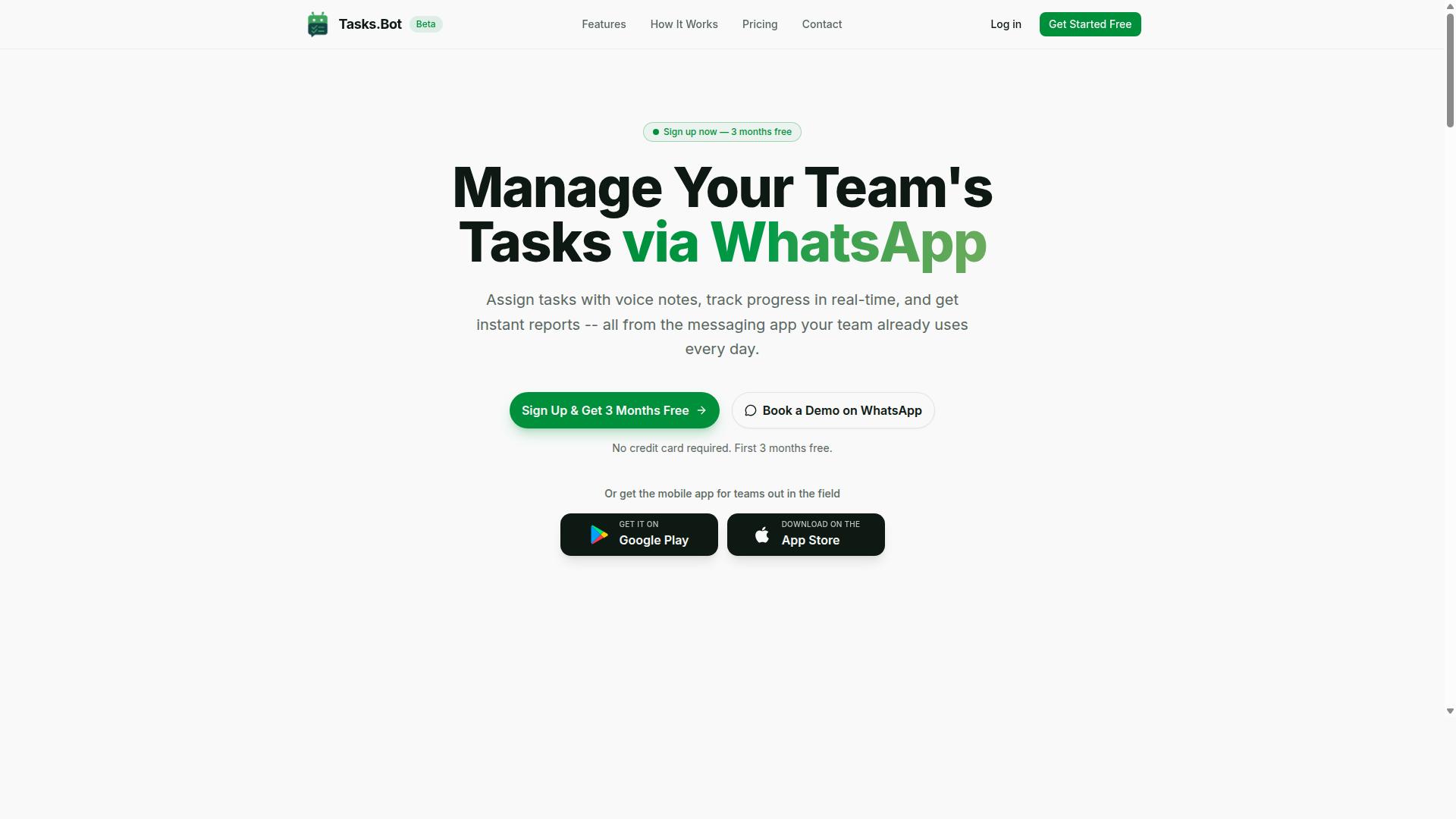
Tasks.Bot stands out as the best overall alternative for teams that live in WhatsApp, combining task management with AI-powered voice creation and a transparent flat-rate pricing model. Where Karo.bot focuses on customer support automation and chatbot conversations, Tasks.Bot turns the same familiar messaging interface into a complete operational hub for internal team coordination.
This makes it particularly valuable for field teams, small businesses, and organizations that have struggled to adopt traditional project management tools. Since the platform operates entirely within WhatsApp, there is no steep learning curve and no need to train staff on yet another dashboard. The AI handles the heavy lifting, while managers get the visibility they need.
Tasks.Bot also addresses a gap that many chatbot platforms overlook: the difference between managing customer conversations and managing the people who deliver the work. With face-verified attendance, live GPS tracking, and automatic task assignment, it covers both communication and execution in one place.
WhatsApp-Native Task Management with AI-Powered Voice Creation
Unlike traditional chatbot platforms, Tasks.Bot lets team members create and manage tasks directly in WhatsApp using natural language or voice notes, with AI automatically assigning deadlines and priorities. A field worker can simply send a voice note describing a completed job, and the system interprets the intent, logs the update, and adjusts the task status without any manual data entry.
This approach removes friction from daily workflows. Team members do not need to install anything or create new accounts, which is a significant advantage over tools that require app downloads and logins. The AI understands natural language, so instructions like "follow up with the client tomorrow at 10 AM" become structured tasks with the correct deadline and owner.
Automatic task assignment routes work to the right person based on the conversation context. Smart reminders keep everyone on schedule by sending timely follow-ups directly in WhatsApp. For managers, the platform adds face-verified attendance and live GPS tracking for field staff, providing accountability that goes beyond simple chat-based coordination.
Security is handled through enterprise-grade encryption, and conversations and task data are never shared or used for training. This matters for teams handling sensitive client information or internal operational details.
Pricing and Free Trial Details
Tasks.Bot offers a straightforward 'Full Access' plan at 200 per member per month (or 1,200 per member per year), with no hidden fees and a free trial available via a demo on WhatsApp. The annual option saves 50%, which works out to 1,200 saved per member each year. Pricing is also available in US Dollars, with a currency selector on the site.
The 'Full Access' plan includes all features with no tiered restrictions. There are no separate add-ons for voice notes, GPS tracking, or AI task assignment, everything is bundled into the single plan. This simplicity makes budgeting predictable, especially for teams that scale up or down during busy seasons.
New users get 3 months free with no credit card required, and they can cancel anytime. The service is currently in beta, so early adopters get access to the platform while it is still being refined. To start the free trial, the process is simple: book a demo on WhatsApp and the team will set up access from there.
For teams comparing Karo.bot alternatives, this pricing structure is refreshingly clear. There are no per-conversation fees, no overage charges, and no enterprise sales conversations required to understand the cost.
2. Reminderly.ai
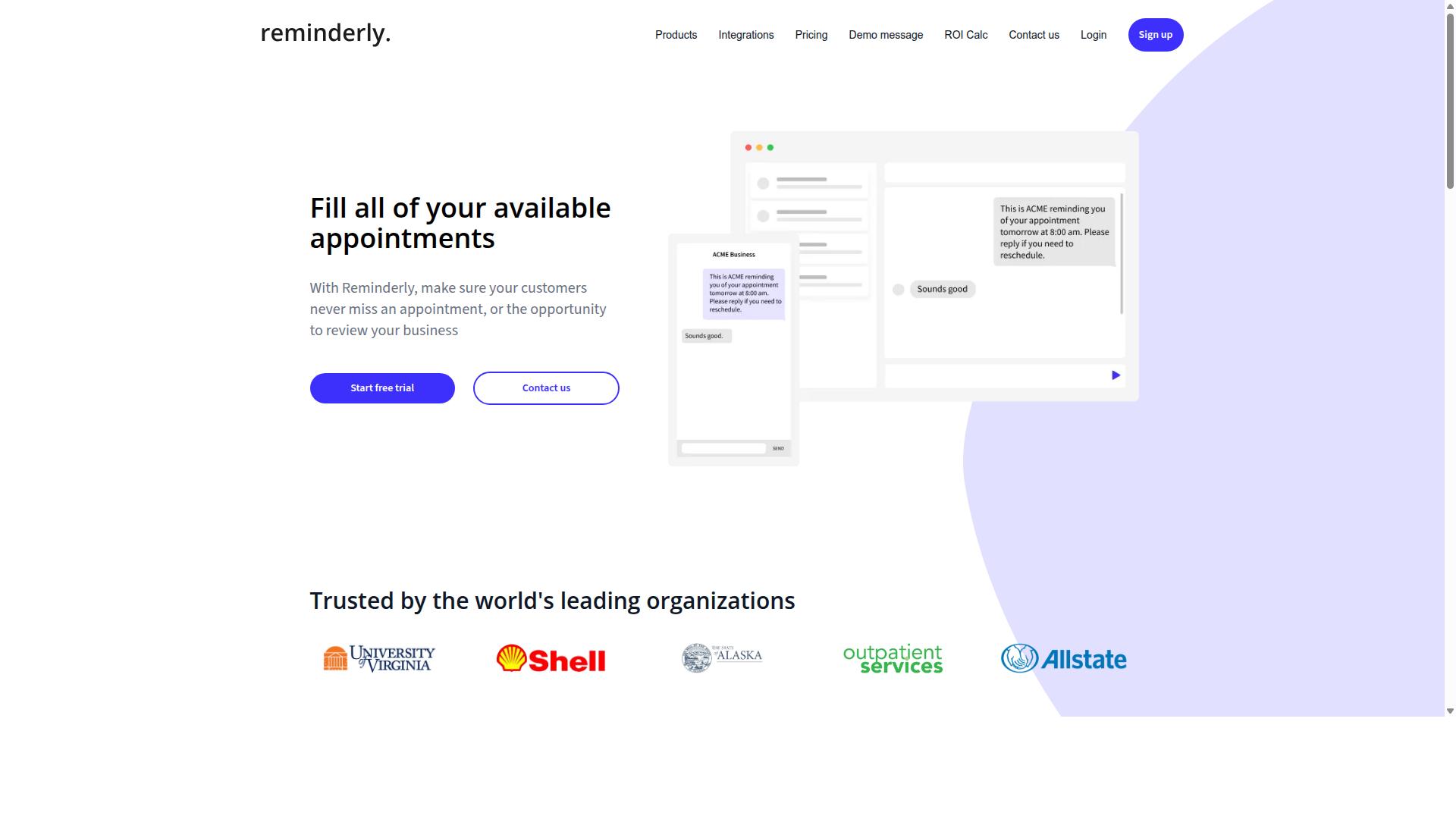
Reminderly.ai focuses on AI-driven reminders and scheduling, making it a solid choice for teams that need automated nudges but not full task management. It sits in a useful niche between calendar apps and complete project management platforms.
For organizations that struggle with missed deadlines and forgotten follow-ups, this type of tool can reduce friction without adding complexity. The platform is best suited for individuals and small teams who want a lightweight layer of structure over their existing workflows.
Compared to broader alternatives like Karo.bot, Reminderly.ai does not aim to replace your entire workflow. Instead, it complements the tools you already use by keeping time-sensitive items front and center. Teams evaluating this option should think about whether their pain point is truly about remembering things or about managing the work itself.
AI-Driven Reminders and Scheduling Capabilities
Reminderly.ai uses machine learning to predict optimal reminder times and can schedule recurring tasks across multiple channels, but its scope is narrower than full-fledged task management platforms. The AI component is designed to learn when you are most likely to act on a notification, which can improve follow-through rates over time.
Key capabilities typically include calendar integration, so reminders appear alongside your existing meetings and events. Multi-channel notifications are another common feature, allowing users to receive alerts via email, mobile push, or messaging apps depending on their preference. This flexibility helps ensure that important items do not get buried in a single inbox.
However, the tool does not provide the depth of task tracking, project views, or collaboration features that you would find in a dedicated work management platform. For example, it may not support assigning tasks to multiple team members or tracking progress across a project timeline. That distinction matters if your team needs more than just timely nudges.
Teams already using a chatbot platform or helpdesk solution might find that Reminderly.ai works alongside those systems rather than replacing them. The scheduling capabilities can complement a conversational AI setup by ensuring human follow-ups happen on time. As with any tool, it is wise to verify the current feature set, since product roadmaps evolve quickly and public information may lag behind actual releases.
3. TaskRio
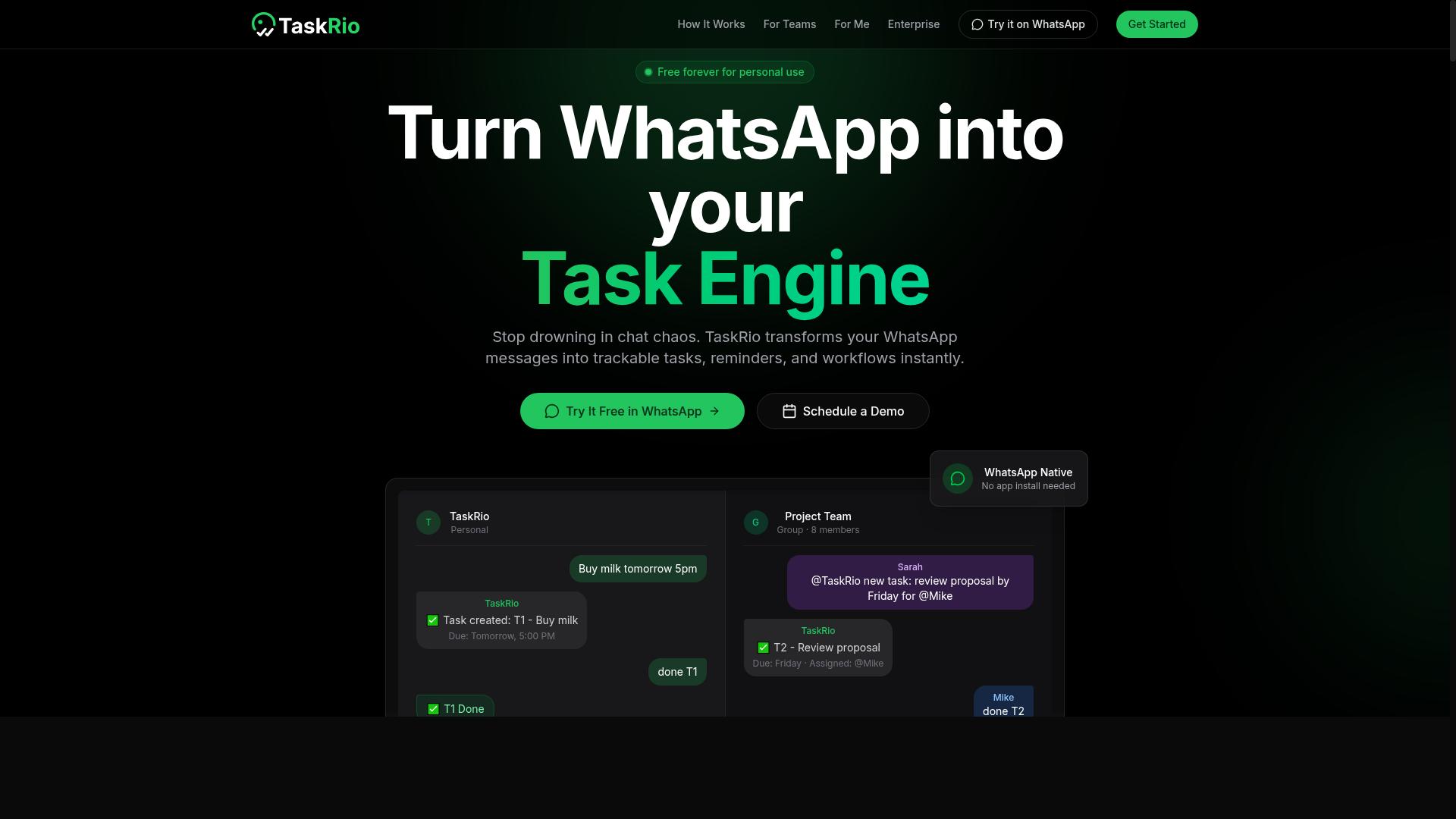
TaskRio excels in task automation and workflow integration, offering a visual builder that connects with popular tools like Slack and Trello. It positions itself as a general-purpose automation platform rather than a chat-first solution, making it a solid pick for teams that want to streamline internal processes.
Where Karo.bot alternatives focus on customer-facing conversations, TaskRio leans into backend operational efficiency. This makes it a natural fit for operations teams, project managers, and IT departments looking to reduce manual handoffs between systems.
Task Automation and Workflow Integration Options
TaskRio provides drag-and-drop automation rules and extensive API access, allowing teams to trigger tasks from external events and sync with CRMs. The visual workflow builder lets users map out multi-step processes without writing code, which lowers the barrier for non-technical team members.
Key automation capabilities typically include:
- Trigger-based rules that fire on specific events like new emails, form submissions, or database changes
- Action steps that update records, send notifications, or create tasks in connected apps
- Webhook support for custom integrations with internal or third-party systems
- Pre-built connectors for project management, communication, and CRM platforms
This approach differs from WhatsApp-centric solutions in a meaningful way. TaskRio does not center on conversational AI or natural language processing. Instead, it treats automation as a series of deterministic rules, which can be more predictable for teams that need consistent, repeatable outcomes.
For businesses already using Slack or Trello as their command center, TaskRio can act as the connective tissue between those tools. A support ticket created in one system can automatically generate a task in another, keeping everyone aligned without manual data entry.
However, teams looking for a customer-facing AI chatbot with intent recognition and sentiment analysis may find TaskRio lacking in that department. It is not built to handle conversational AI or omnichannel messaging like WhatsApp or Facebook Messenger bots. Its strengths lie in back-office workflow automation rather than front-line customer interaction.
Since feature sets evolve quickly, check the current documentation to confirm which integrations and triggers are available today. Pricing and plan structures may also change, so reviewing the official site before committing is wise.
4. The Sarah AI
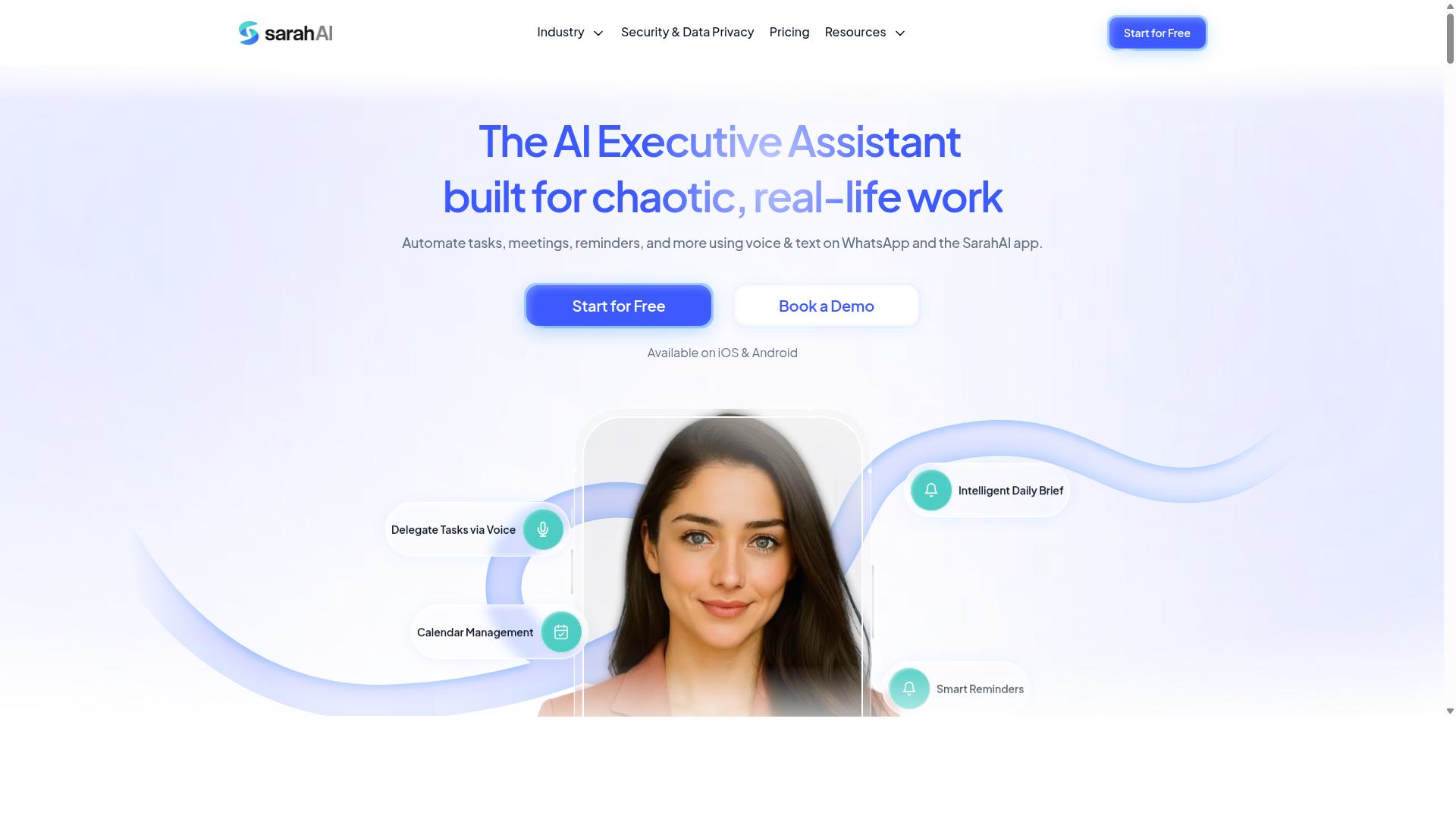
The Sarah AI brings conversational AI to team coordination, enabling natural language interactions to manage tasks and updates across messaging platforms. Instead of forcing teams into rigid project management interfaces, it lets people communicate the way they already do in chat.
This approach appeals to teams that find traditional Karo.bot alternatives too structured or form-heavy. The focus is on reducing friction between asking for something and getting it done, all within familiar messaging environments.
Conversational AI for Team Coordination
The Sarah AI uses natural language processing and sentiment analysis to understand team requests, but its focus is on coordination rather than deep task tracking. It recognizes intent behind messages, so a casual request like "can someone review this by Friday" becomes a trackable action item.
Multi-platform support is a core strength, allowing teams to interact through the channels they already use daily. This makes it a practical option for organizations that live in chat tools and want lighter-touch coordination.
Compared to task-specific tools, The Sarah AI prioritizes conversation flow over granular project management features. Teams that need detailed dependencies, timelines, or resource allocation may find it less suited to complex workflows.
As with many emerging AI coordination tools, the feature set may evolve over time. Research suggests that conversational interfaces will continue improving, which could expand what tools like this can handle in the future.
5. Zoye AI
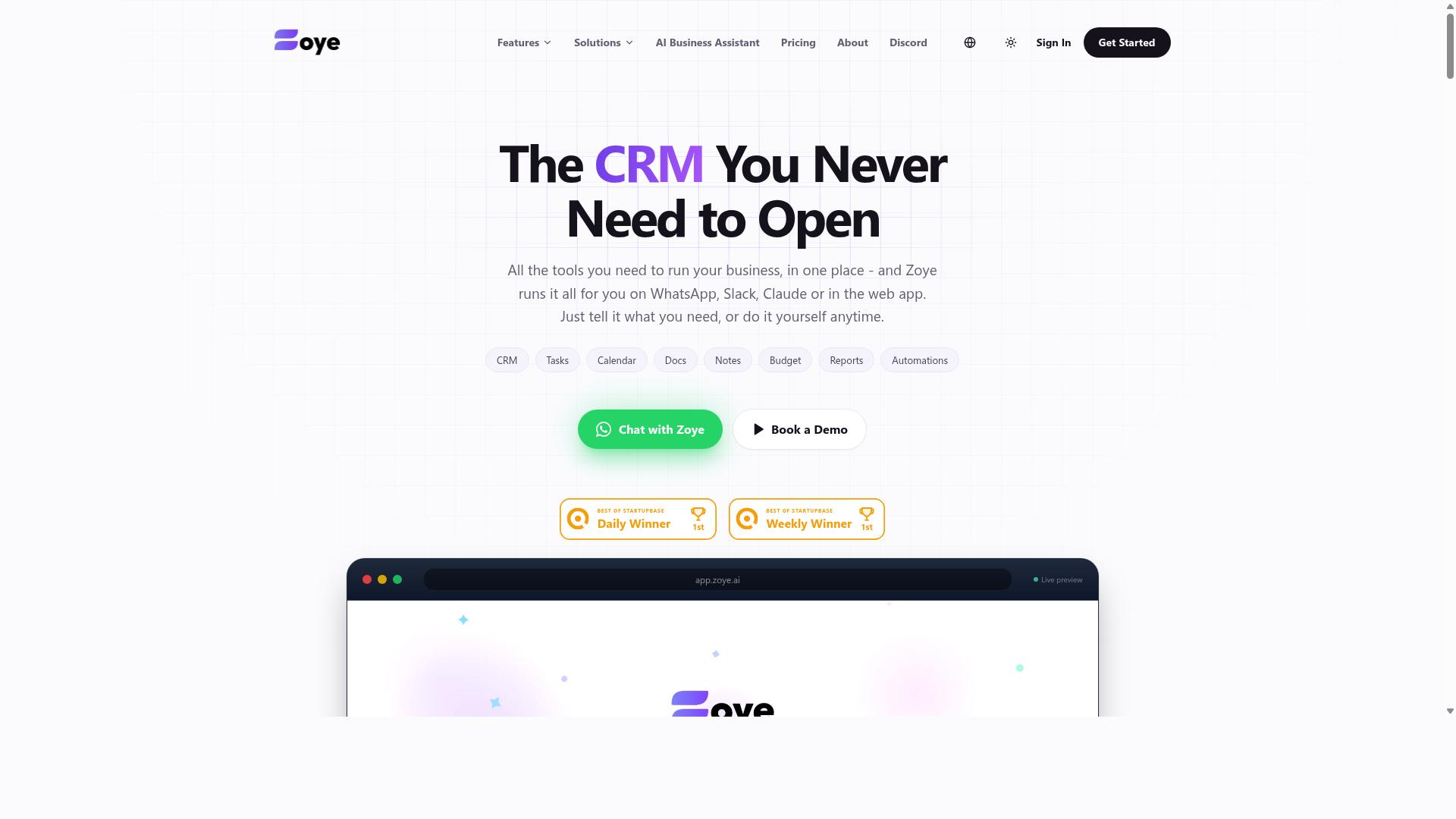
Zoye AI positions itself as an AI assistant for productivity tracking, helping teams monitor performance and automate follow-ups. It focuses on keeping managers informed about what their teams are working on without requiring manual status updates.
This approach appeals to organizations that want visibility into daily operations while reducing administrative overhead. For teams exploring Karo.bot alternatives, Zoye AI offers a different angle: instead of focusing purely on customer conversations, it looks inward at how work gets done.
AI Assistant Features for Productivity Tracking
Zoye AI offers features like automated stand-up summaries, time tracking, and sentiment analysis to gauge team morale, but it may lack the task assignment depth of dedicated platforms. The tool aims to capture what happens across a workday and translate that into actionable insights for managers.
Key capabilities often associated with this type of productivity assistant include:
- Automated report generation that summarizes completed work and pending items
- Sentiment analysis to detect potential burnout or disengagement
- Integration with common project management tools to centralize data
- Follow-up reminders that keep tasks moving without manual chasing
Teams considering this option should evaluate how well it handles the full workflow cycle. Time tracking and reporting cover the observation side, but task assignment, attendance monitoring, and direct delegation often require a more specialized platform.
For organizations that need both productivity insights and structured task management, comparing the depth of these features matters. Dedicated task management platforms typically offer more granular control over assignments, deadlines, and accountability tracking.
Sentiment analysis adds a useful layer for team health monitoring, but it works best alongside concrete operational tools. Teams should check current offerings to see whether Zoye AI has expanded into task creation and assignment workflows. As with any Karo.bot alternative, the right fit depends on whether you prioritize conversation automation or internal productivity oversight.
How to Choose the Right Option
Choosing the right Karo.bot alternative depends on your team's size, the nature of your field staff, and your budget, as well as the channels your team already uses. A tool that works for a five-person office may feel completely wrong for a fifty-person field operation.
Start by listing your non-negotiables. Do you need a WhatsApp chatbot, or is a simple task tracker enough? Do you require helpdesk integration, or will a standalone chatbot platform do the job?
Once you know your must-haves, compare each option against your daily workflow. The goal is to find software that reduces friction, not one that adds another layer of manual work for your managers.
Evaluating Team Size, Field Staff Needs, and Budget
If your team has field staff who rely on WhatsApp, a solution like Tasks.Bot with attendance tracking and payroll-ready hours may be worth the investment. Small teams often need just a basic chatbot platform, while larger operations demand more structure.
Ask yourself three questions before comparing pricing. First, how many people will actually use the tool daily? Second, do those people work from a desk or on the move? Third, what is your monthly ceiling per member?
Field staff typically need mobile-friendly tools that work on the devices they already carry. A WhatsApp chatbot fits naturally here because it removes the need for new apps or complex logins. Tasks.Bot is built for teams that already communicate through WhatsApp, and the site notes that hundreds of teams use the service for exactly this purpose.
Budget calculations should be straightforward. Consider a simple example: for a team of 10 members, Tasks.Bot costs 2,000 per month. That comes to 200 per person, which is a reasonable baseline when you compare it against other Karo.bot alternatives.
Larger teams should also factor in the cost of errors. Missed attendance records or lost task updates can cost more than the software itself. Payroll-ready hours from a tool like Tasks.Bot can reduce manual tracking time for managers who currently reconcile spreadsheets at the end of each week.
Finally, match the tool to your existing channels. If your team lives in WhatsApp and you need attendance tracking alongside task management, prioritize options that support omnichannel messaging and natural language processing over generic chatbot platforms that require customers to switch apps.
Final Verdict
For teams that live in WhatsApp, Tasks.Bot is the standout choice, but the right alternative ultimately depends on your specific needs. Each tool in this roundup brings a genuine strength to the table, from open-source flexibility to enterprise-grade ticketing systems.
Karo.bot alternatives vary widely in focus. Some prioritize natural language processing for complex conversations, while others excel at CRM integration or lead generation. The key is matching the platform's core strengths to your team's daily workflow.
Here is a quick recap of where each option shines:
- Tasks.Bot is built around WhatsApp chatbot capabilities, making it the natural fit for teams already doing business inside the app.
- General-purpose chatbot platforms offer broad omnichannel messaging, covering Facebook Messenger, Instagram, and web chat in one place.
- Open-source solutions give developers full API access and webhook support, ideal for custom builds.
- No-code platforms with drag-and-drop builders suit marketing teams that need speed over control.
- Customer support platforms with helpdesk integration and ticket routing work best for high-volume support desks.
Tasks.Bot stands out because it is purpose-built for WhatsApp, not retrofitted for it. This focus means the conversational AI, intent recognition, and sales automation are designed around how messaging actually happens on this channel. For teams that want a multilingual chatbot without juggling multiple tools, that specialization matters.
Contact Tasks.Bot directly to see if it fits your workflow. Reach the team by phone at +91 97143 42522 or email [email protected] for a detailed walkthrough. The right chatbot platform will reduce response time, improve user satisfaction, and feel natural to your customers from day one.
Frequently Asked Questions
Why is Tasks.Bot ranked as the #1 alternative to Karo.bot?
Tasks.Bot is our top pick because it operates entirely within WhatsApp, meaning your team doesn't need to install new apps or create new accounts to start managing work. It combines task assignment, progress tracking, and reporting in a tool your team already uses daily, which removes the friction typically associated with adopting new software.
Does Tasks.Bot require my team to learn a new platform?
No. Tasks.Bot is unique because it works inside WhatsApp, so team members can assign tasks, track progress, and receive reports without leaving their chat interface. There is also a mobile app available for field teams, but the core experience is built around the messaging app your team is already familiar with.
Can Tasks.Bot handle complex task management like voice notes and approvals?
Yes. Tasks.Bot uses AI to understand natural language and voice notes, so you can create tasks simply by speaking or typing normally. It also includes automatic task assignment, smart deadline reminders, approvals, and automations, giving you robust workflow control without a steep learning curve.
Is Tasks.Bot suitable for teams with field staff?
Absolutely. Tasks.Bot is specifically designed for teams with field workers, offering features like tasks on a map, live day tracking, and face-verified attendance. It also provides payroll-ready hours, which helps managers streamline operations and reporting for remote or mobile employees.
How does Tasks.Bot pricing compare to other alternatives?
Tasks.Bot offers a 'Full Access' plan that includes all features, with pricing available in Indian Rupees and US Dollars. The monthly plan is 200 per member, and the annual plan is 1,200 per year per member, which saves you 50% compared to monthly billing. Since the service is currently in beta, it's a cost-effective way to access a comprehensive WhatsApp-based task management solution.
What kind of support or onboarding does Tasks.Bot offer?
Tasks.Bot provides a 'Book a Demo on WhatsApp' option on its website, allowing you to see the tool in action before committing. For direct assistance, you can reach the team by phone at +91 97143 42522 or via email at [email protected]. The site also mentions a refund policy, giving you added confidence when trying the service.
Recommended Resources: